MEP maintenance is usually noticed only when something stops working. The AC stops cooling during peak business hours. A pump fails and water pressure drops. A circuit trips again and nobody knows why. A small leak appears on the ceiling, and by the time someone checks it, the damage has already spread.
That is the problem with Mechanical, Electrical, and Plumbing systems. They work quietly in the background until they do not.
Preventive MEP maintenance helps building owners, facility managers, and business operators catch these problems before they turn into shutdowns, safety risks, tenant complaints, or expensive repairs. For facilities in Saudi Arabia, where cooling demand, dust exposure, and operational expectations are high, prevention is not just good practice. It is the difference between control and chaos.
#Table of Contents
showhide
What Is MEP Maintenance?
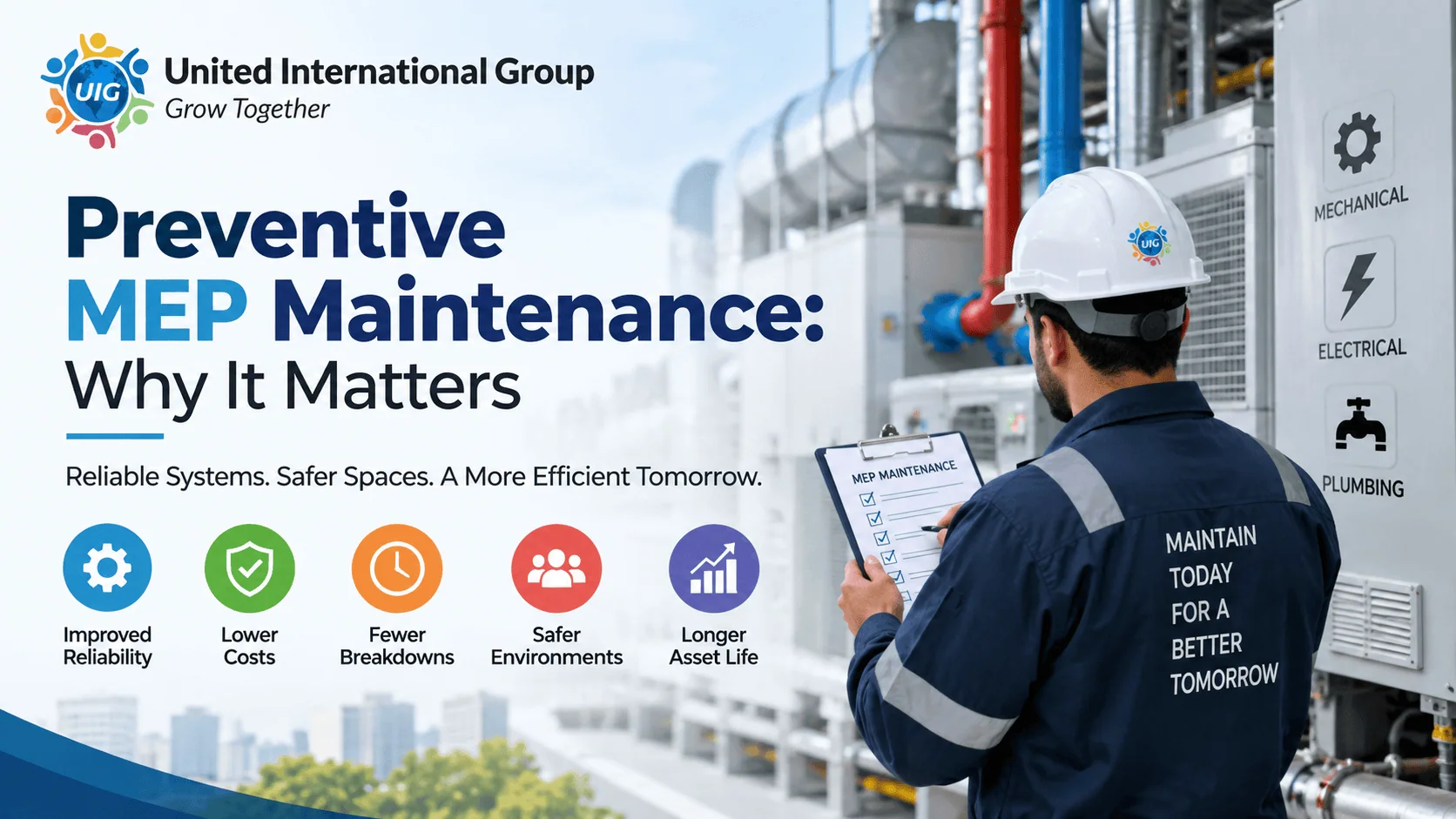
MEP maintenance means regularly inspecting, servicing, testing, and repairing a building’s Mechanical, Electrical, and Plumbing systems.
These are the systems that make a building usable every day. They control air conditioning, ventilation, lighting, power, water supply, drainage, pumps, electrical panels, and many other essential functions.
A building can look perfect from the outside and still have weak MEP systems behind the walls, above the ceiling, or inside the plant room.
Good MEP maintenance keeps these systems stable, safe, and efficient.
It usually includes:
HVAC inspection and servicing
Chiller, AHU, and FCU maintenance
Electrical panel inspection
Generator and UPS testing
Lighting system checks
Plumbing leak detection
Pump and valve maintenance
Drainage inspection
Water pressure checks
Equipment cleaning and calibration
Emergency repair support
Maintenance reporting and documentation
In simple words, MEP maintenance keeps the building’s core systems healthy.
What Does MEP Include?
MEP includes three major parts: Mechanical, Electrical, and Plumbing.
Each one has a different role, but they are deeply connected. When one fails, the others can also be affected.
Mechanical Systems: Cooling, Ventilation, and Air Movement
Mechanical systems mainly include HVAC systems. HVAC stands for Heating, Ventilation, and Air Conditioning.
In Saudi Arabia, this is one of the most critical parts of any building because cooling systems often run for long hours. A poorly maintained HVAC system does not just affect comfort. It can increase electricity bills, reduce indoor air quality, and shorten equipment life.
Mechanical maintenance may include:
Cleaning or replacing air filters
Inspecting air handling units
Servicing fan coil units
Checking chillers and cooling towers
Cleaning condenser and evaporator coils
Testing thermostats and sensors
Checking belts, bearings, and motors
Inspecting ductwork and airflow
Maintaining exhaust and ventilation systems
A simple example: if AC filters are blocked, the system has to work harder to push air. That means higher power use, weaker cooling, and more stress on the equipment. One small neglected filter can slowly become a much bigger cost.
Electrical Systems: Power, Safety, and Backup Support
Electrical systems power almost everything inside a facility.
They support lighting, HVAC, elevators, pumps, machinery, security systems, IT rooms, kitchen equipment, medical equipment, and backup power systems.
Electrical maintenance is not an area where guesswork is acceptable. A loose connection, overloaded panel, weak breaker, or poor grounding can create serious safety risks.
Electrical MEP maintenance may include:
Electrical panel inspection
Circuit breaker testing
Generator maintenance
UPS inspection
Cable and wiring checks
Earthing and grounding inspection
Load testing
Lighting maintenance
Infrared thermal scanning
Power distribution checks
For example, a commercial building may not notice an overheating panel immediately. But over time, that heat can damage components, increase fire risk, and lead to sudden power failure. Preventive inspection helps catch these warning signs early.
Plumbing Systems: Water Supply, Drainage, and Flow Control
Plumbing systems manage water movement throughout the building.
This includes water supply lines, drainage systems, pumps, valves, tanks, heaters, and wastewater systems. Plumbing problems can spread quickly because water damage rarely stays in one place.
Plumbing maintenance may include:
Leak detection
Pipe inspection
Drainage cleaning
Pump servicing
Valve testing
Water pressure checks
Tank and water system support
Sewage line inspection
Water heater maintenance
Preventive checks for corrosion or blockage
A small leak above a ceiling can damage tiles, wiring, furniture, walls, and flooring. By the time it becomes visible, the cost is already higher than it needed to be.
Why Preventive MEP Maintenance Matters
Preventive MEP maintenance matters because buildings do not fail all at once. They usually give warnings first.
The AC starts taking longer to cool. A pump becomes noisy. The electricity bill rises. A breaker trips once, then twice. Water pressure drops. Tenants complain about bad smell from drains.
These are not random issues. They are early signs.
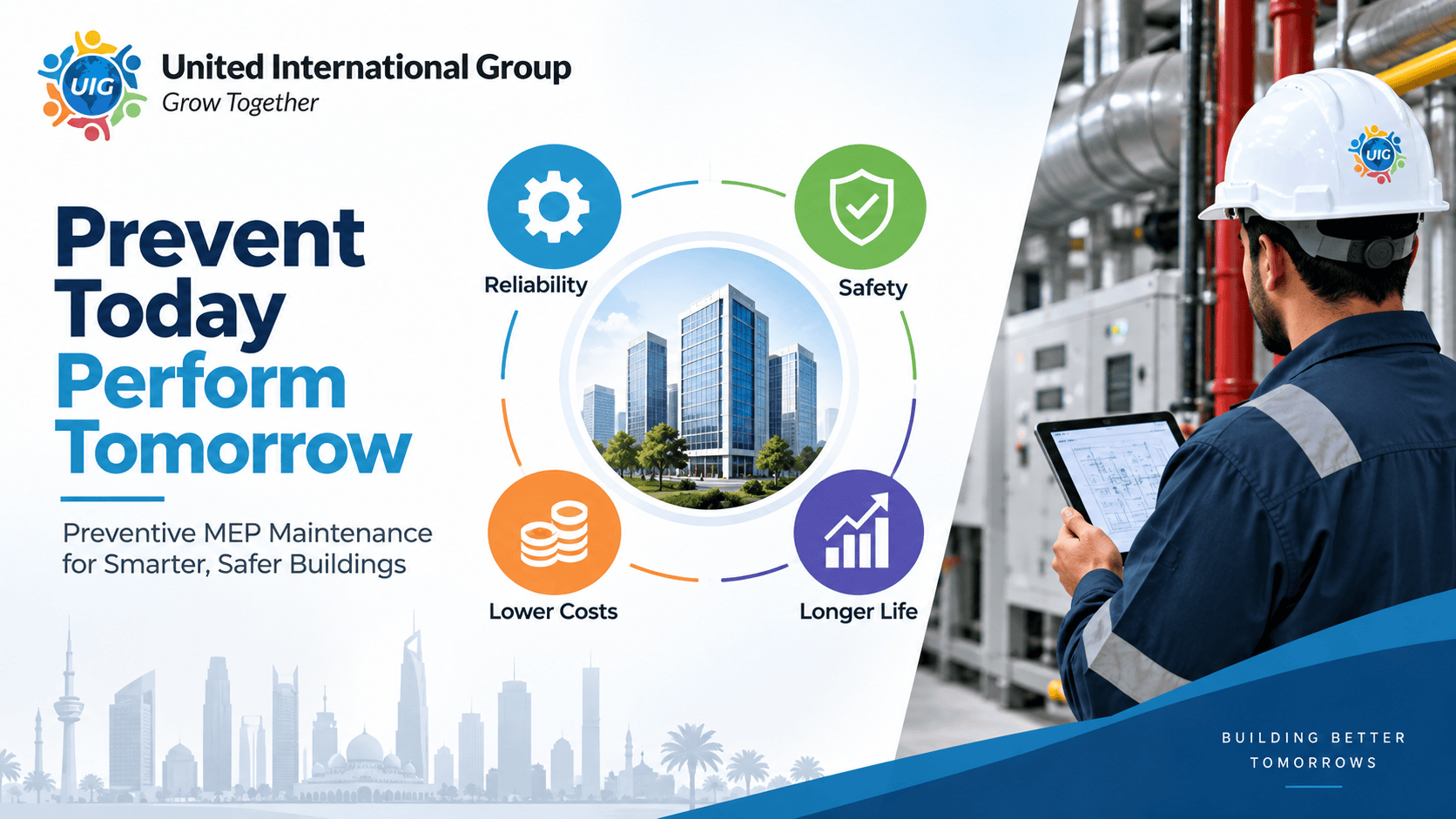
Preventive maintenance gives facility managers a chance to act before the problem becomes urgent.
It helps with:
Fewer unexpected breakdowns
Lower emergency repair costs
Better safety
Better energy performance
Longer equipment life
Fewer tenant or customer complaints
Better budget planning
Cleaner maintenance records
More reliable facility operations
Reactive maintenance means waiting for failure. Preventive maintenance means managing risk before failure.
Preventive MEP Maintenance vs Reactive Maintenance
Factor
Preventive MEP Maintenance
Reactive Maintenance
Timing
Planned before failure
Done after something breaks
Cost
More predictable
Usually higher and urgent
Downtime
Lower risk
Higher risk
Safety
Problems found early
Risks may stay hidden
Equipment Life
Helps extend lifespan
Speeds up wear and tear
Business Impact
Less disruption
Can stop operations
Best Use
Critical building systems
Emergency repairs only
Reactive maintenance will always exist because unexpected issues can happen. But it should not be the main strategy for HVAC, electrical, plumbing, pumps, chillers, generators, or other critical assets.
A building that depends only on emergency repairs is usually spending more than it realizes.
Why MEP Maintenance Is Especially Important in Saudi Arabia
Buildings in Saudi Arabia face demanding operating conditions.
In cities like Jeddah, Riyadh, Jubail, and across the Eastern Province, facilities often deal with high cooling loads, dust, long equipment operating hours, and large-scale commercial or industrial use.
HVAC systems work harder. Filters collect dust faster. Outdoor equipment faces heat exposure. Industrial facilities may need more frequent inspection. Commercial buildings need consistent comfort because customer and tenant expectations are high.
For Saudi businesses, preventive MEP maintenance helps reduce:
AC breakdowns during peak heat
High energy consumption
Electrical faults caused by overloaded systems
Plumbing issues in high-occupancy buildings
Operational downtime in industrial facilities
Repeated emergency callouts
Long-term asset damage
United International Group has been serving clients since 2011 as a facility management service provider in Saudi Arabia. That experience matters because MEP maintenance is not only about technical repair. It is about understanding how buildings actually operate day after day.
What Should a Preventive MEP Maintenance Plan Include?
A strong preventive maintenance plan should be clear, scheduled, and practical.
It should not be a generic checklist copied from another building. A hospital, warehouse, office tower, hotel, and industrial site do not have the same risks.
A proper MEP maintenance plan should include:
1. Complete Asset List
Every important system should be listed. This includes HVAC units, chillers, pumps, electrical panels, generators, water tanks, valves, and control systems.
2. Maintenance Schedule
Tasks should be divided into daily, weekly, monthly, quarterly, and annual checks.
3. System-Based Checklists
Mechanical, electrical, and plumbing systems should each have their own checklist.
4. Emergency Response Process
Even good buildings face emergencies. The plan should define who responds, how quickly, and what happens next.
5. Maintenance Reports
Reports should show what was inspected, what was repaired, what needs attention, and what should be planned next.
6. Spare Parts Planning
Critical parts should be identified in advance so repairs do not get delayed.
7. Performance Review
Recurring breakdowns, energy use, complaints, and asset condition should be reviewed regularly.
Signs Your Facility Needs Better MEP Maintenance
Some signs should not be ignored.
Your building may need better MEP maintenance if you notice:
AC units cooling slowly
Sudden increase in electricity bills
Frequent breaker trips
Hot electrical panels
Water leaks or damp walls
Low water pressure
Noisy pumps or motors
Drainage smell
Uneven cooling in different areas
Generator starting issues
Repeated emergency repairs
Poor indoor air quality
Tenants or staff complaining often
One issue may not seem serious. Repeated issues usually mean the building needs a better maintenance system.
How Often Should MEP Maintenance Be Done?
MEP maintenance frequency depends on the building type, system age, usage level, and risk.
A small office may need a different schedule than a hospital, mall, hotel, or factory.
A building has to stay safe, comfortable, and operational. The maintenance partner should make that easier, not more complicated.
Need fewer breakdowns and better control over your building systems? Contact United International Group for a preventive MEP maintenance plan tailored to your facility.
Conclusion
MEP maintenance is not just a technical service. It protects the building, the people inside it, and the business that depends on it.
When mechanical, electrical, and plumbing systems are maintained properly, the facility runs with fewer breakdowns, fewer complaints, lower risk, and better cost control. When they are ignored, the problems usually show up at the worst possible time.
Preventive MEP maintenance gives facility owners and managers a better way to operate. It turns maintenance from a reaction into a plan.
For businesses in Saudi Arabia, especially across Jeddah, Riyadh, Jubail, and the Eastern Province, this matters even more because building systems work hard every day.
United International Group has been serving clients since 2011 with facility management services designed to keep buildings safer, cleaner, and more reliable.
Contact United International Group today to schedule a facility assessment or request a customized MEP maintenance proposal.
UIG Blog CTA – Integrated Facility Management
Talk to UIG
Need fewer breakdowns and better control over your building systems?
Contact United International Group for a preventive MEP maintenance plan tailored to your facility.